The question is fair and the timing is right. Real estate crowdfunding platforms have been appearing in the Nigerian market with increasing frequency, attracting attention from young professionals, diaspora investors, and first-time buyers who find the low entry points appealing. The concept feels modern and accessible.

Before committing any money to any crowdfunding platform, every serious Nigerian investor deserves an honest, complete answer to the legitimacy question. Not a promotional answer from a platform trying to attract deposits. Not a dismissive answer from someone who rejects everything digital.
An honest, balanced assessment of what Nigerian real estate crowdfunding actually is, what protections exist, what risks remain, and how it compares to the more established alternative of buying physical, documented land from a credible developer.
What Real Estate Crowdfunding Actually Means
The Basic Model Explained Plainly
Real estate crowdfunding pools money from multiple investors to collectively fund a property acquisition or development that individual investors could not afford alone.
A platform identifies a property, structures an investment vehicle around it, accepts contributions from multiple investors at relatively low minimum amounts, and distributes returns to contributors in proportion to their investment when the property generates income or is sold.
The appeal is accessibility. A buyer who cannot yet afford a full plot of land in a quality Enugu estate can contribute a smaller amount through a crowdfunding platform and participate in property returns that were previously unavailable at their capital level.
The platform handles property management, tenant relations, and administrative responsibilities that individual property owners typically manage themselves.
The model has produced legitimate, regulated, return-generating operations in the United Kingdom, the United States, and parts of Europe. Investors in those markets have received their promised returns, recovered their capital, and built confidence in the model over years of operating history backed by strong regulatory frameworks.
How the Nigerian Version Differs From Global Models
The Nigerian real estate crowdfunding market differs from its global counterparts in ways that every investor must understand before committing capital.
The regulatory framework governing digital investment platforms in Nigeria is still developing. The Securities and Exchange Commission of Nigeria has been working on frameworks for digital assets and investment platforms, but comprehensive, specific regulation of real estate crowdfunding has not yet been fully implemented.
This regulatory gap is not a permanent condition. It reflects the natural lag between innovation and regulation that every market experiences as new financial products emerge.
The gap will narrow as the SEC develops and implements more comprehensive frameworks. The practical consequence for investors today is that the level of regulatory protection available to real estate crowdfunding participants in Nigeria is significantly lower than what equivalent investors in more regulated markets enjoy.
Evaluating Legitimacy: What to Look For
Regulatory Status as the First Filter
The most important legitimacy indicator for any Nigerian real estate crowdfunding platform is its regulatory status with the Securities and Exchange Commission of Nigeria.
A platform that has obtained formal registration or approval from the SEC has submitted to a level of regulatory scrutiny that unregistered platforms have not.
Before committing any capital to any crowdfunding platform, search the SEC’s official website for the platform’s registration status.
Request the platform’s SEC registration number and verify it directly with the commission. A platform that cannot provide clear evidence of SEC registration or that deflects questions about regulatory status is operating without the oversight that protects investors in regulated financial products.
Regulatory registration does not guarantee that a platform will deliver promised returns or that the underlying property assets are genuinely as described. It does mean that the platform has disclosed its structure, its management, and its operations to a government authority that has the power to investigate and sanction non-compliance.
Track Record as the Second Filter
A legitimate real estate crowdfunding platform has a verifiable history of completed investment cycles in which investors contributed capital, the property performed as described, and returns were distributed as promised.
This track record is the most direct evidence available that the platform’s model works in practice rather than only in theory.
Ask any platform you are considering for documented evidence of completed investment cycles.
Request records showing investor contributions, property performance, and return distributions for previous projects. A platform that has been operating for less than two years has not had sufficient time to demonstrate a track record meaningful enough to support significant investor confidence.
New platforms without a track record are asking investors to be their first wave of participants. The risk profile of that position is materially higher than investing with a platform whose model has been tested and validated through multiple completed cycles.
Asset Transparency as the Third Filter
A legitimate real estate crowdfunding platform can identify the specific physical property that underlies each investment offering with enough detail that investors can independently verify its existence and value. The property should be identifiable on a map, visitable in person, and describable through documentation that investors can examine before committing.
Platforms that describe investment opportunities in vague terms, that reference property assets without providing specific identifying information, or that make access to underlying asset details conditional on prior investment are not providing the transparency that legitimate property investment requires.
The specific address of the property, the current ownership documentation, the valuation methodology, the income projection basis, and the exit strategy should all be available to prospective investors before any commitment is requested.
Requesting this information from any platform you are evaluating is not a sign of excessive caution. It is the standard due diligence that any serious investor applies before committing money to any property-related investment.
The Risks That Honest Assessment Cannot Ignore
Platform Risk: The Danger of the Intermediary
Every real estate crowdfunding investment depends on the continued operation of the platform through which the investment was made.
If the platform encounters financial difficulties, governance failures, or regulatory sanctions that cause it to cease operating, investors may find their capital trapped in an investment structure that has no functional manager and no clear path to recovery.
Nigerian investment platform history includes multiple examples of digital investment vehicles that launched with credible marketing, attracted significant investor funds, and subsequently failed to return capital or pay promised returns.
These failures have occurred across different investment categories and have affected investors at every level of financial sophistication.
The pattern is consistent enough to be treated as a category risk rather than a series of isolated incidents. A real estate crowdfunding platform that fails does not necessarily mean the underlying property has no value.
It means the legal and administrative structure connecting investors to that value has broken down, and rebuilding that connection from outside the failed structure is a complex, expensive, and often unsuccessful process.
Liquidity Risk: When You Need Your Money Back
Most Nigerian real estate crowdfunding arrangements lock investor capital for a defined period that typically ranges from one to three years or longer.
illiquidity that characterizes direct property ownership, which is generally considered a disadvantage of physical land investment, is also present in most crowdfunding arrangements but without the compensating benefit of direct, legally documented ownership of a physical asset.
An investor who needs their committed capital before the end of the lock-up period typically faces limited exit options.
Secondary market trading of crowdfunding interests is not well-developed in Nigeria’s current market. Platform-facilitated exits, where available, may involve discounts that significantly reduce the capital recovered relative to the amount invested.
Understanding the liquidity terms of any crowdfunding investment before committing is non-negotiable. A platform that presents its investment as flexible or liquid without specifying the precise conditions and timeline for capital access is presenting an incomplete picture that deserves careful scrutiny.
Return Risk: The Gap Between Projection and Reality
Projected returns in crowdfunding marketing materials are estimates based on assumptions about property performance, rental income, occupancy rates, and appreciation trajectories.
Every one of these assumptions can prove inaccurate, and the combination of multiple optimistic assumptions creates a compounding risk that actual returns will fall short of projections.
A property that generates lower rental income than projected, a development that overruns its budget and timeline, or a property whose value does not appreciate as expected all create situations where investor returns are reduced below what was presented in the offering materials.
The investor has no direct control over the property’s management and limited ability to influence outcomes when performance falls short.
In direct land ownership, underperformance relative to expectations does not reduce the value of your legal ownership of the underlying asset.
You still own the land regardless of whether the surrounding area developed as quickly as you hoped. In a crowdfunding arrangement, underperformance reduces the returns that flow to you through the platform without giving you any alternative claim against the underlying asset.
The Direct Comparison: Crowdfunding vs Physical Land Ownership
What Physical Land Ownership Gives You That Crowdfunding Cannot
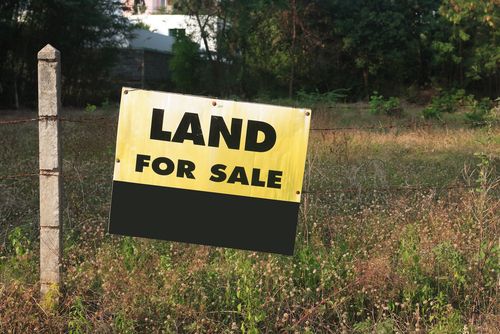
Direct ownership of a physical, documented plot of land in Enugu gives every investor a set of protections and benefits that no crowdfunding platform can replicate regardless of how well-structured it is.
Your ownership is evidenced by legal instruments including Land Title, Deed of Assignment, and Registered Survey Plan that exist independently of any platform, any management company, and any investment structure.
The Central Bank of Nigeria cannot change a policy that affects your legal instruments. A platform cannot go out of business in a way that extinguishes your ownership. Your investment is not subject to lock-up periods that prevent you from selling when you choose.
You can visit your land. You can stand on it, see its boundaries, confirm its existence, and observe the development happening around it.
This tangibility is not a small thing. It is the foundation of the confidence that direct property ownership provides and that no digital record of a fractional interest in a managed fund can replicate with the same quality.
Your appreciation is driven by real, physically verifiable factors including infrastructure development, population growth, and urban expansion that you can independently observe and assess.
At The Wealthy Place near Centenary City, Royal Court Apartments, the Transmission Company of Nigeria at Ugwuaji, and Primary Health Centre Obeagu, every appreciation driver is visible on the ground before you buy. The infrastructure exists. The institutions are present. The development trajectory is observable.
At The Prideland in Golf Annagu Phase 2 with its Government Allocation title, asphalted roads, gated perimeter, water supply, electricity, relaxation centre, and drainage system at 25 million naira per plot, the infrastructure that supports your investment’s value is physically present and verifiable during a site visit. No platform presentation or projected return statement provides that level of tangible confirmation.
Royal Garden and Resort, Viva-Gold Real Estate’s flagship resort-style development, extends this physical reality into a full community vision that creates lifestyle value alongside investment value. The resort-style environment being created is a real, physical, visitable development whose progress you can observe and whose quality you can assess before and after your purchase.
When Crowdfunding Makes Sense Within a Broader Strategy
Real estate crowdfunding is not worthless for every Nigerian investor in every circumstance.
A buyer who has already established a foundation of physically documented land ownership and who wants to deploy additional capital across multiple property exposures while maintaining some liquidity has a legitimate use case for a carefully selected, well-regulated crowdfunding platform as a supplementary allocation.
The critical framing is supplementary. Crowdfunding as a complement to established physical land ownership is a reasonable diversification strategy for investors whose primary wealth foundation is already secured through direct, documented property.
Crowdfunding as a substitute for direct land ownership is a strategy that trades the strongest protections available to Nigerian property investors for the convenience of a lower entry point and the assumption of risks that those protections would otherwise prevent.
The Honest Answer to the Legitimacy Question
Real estate crowdfunding in Nigeria is neither uniformly legitimate nor uniformly fraudulent. Legitimate platforms exist alongside fraudulent ones in a market whose regulatory framework has not yet developed the clarity and enforcement capacity to make the distinction obvious to non-expert investors.
A platform with clear SEC registration, a verifiable track record of completed investment cycles, full asset transparency, and management whose identities and qualifications are publicly stated and independently verifiable is a platform whose legitimacy can be assessed positively on the available evidence.
A platform that lacks any of these elements is asking investors to trust a proposition that has not been adequately verified.
The safest position for any Nigerian investor approaching real estate crowdfunding is to treat the legitimacy question as unanswered until specific verification steps confirm a positive answer, to limit any crowdfunding allocation to capital that can be lost without catastrophic consequence, and to ensure that the foundation of their property wealth is built on direct, physically documented land ownership from a credible developer.
Viva-Gold Real Estate provides that foundation in Enugu. Their land is physically real. Their documentation is complete. Their team is physically present.
Their estates are visitable before any commitment is made. That combination of verifiable physical reality and comprehensive legal documentation is the standard against which every alternative investment proposition should be measured.
Build your property wealth on a foundation that no platform failure can affect.
Contact Viva-Gold Real Estate today and invest in land whose ownership is real, legal, and entirely yours.
Call or WhatsApp: +234 813 221 5202 | +234 901 001 0160 Email: info@vivagoldrealestate.com