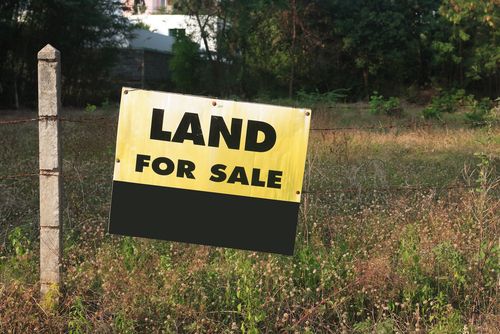
There is a Igbo proverb that translates roughly as this. A man without land is a man without a name. It is not a proverb about money.
It is not a proverb about investment returns or property values or capital appreciation. It is a proverb about identity, belonging, dignity, and the fundamental human need to be rooted in something permanent and real.
In Southeast Nigeria, land is never simply an asset. It is a statement. It is a declaration of who you are, where you come from, and what you intend to leave behind.
Understanding this cultural dimension does not diminish the financial analysis of land investment. It enriches it. Because the cultural meaning of land in this region is precisely what sustains the demand that makes land investment financially powerful across generations.
Land as Identity and Belonging
The Igbo Concept of Ala
In traditional Igbo cosmology, Ala is simultaneously the earth goddess and the physical ground on which communities are built.
She is one of the most significant deities in the Igbo spiritual framework, responsible for morality, fertility, and the continuity of community life.
The ground itself is sacred, not metaphorically but literally within the worldview that has shaped Southeast Nigerian culture for centuries.
This spiritual foundation gives land a meaning in the Igbo cultural imagination that goes far beyond its economic utility.
The land on which your father’s compound stands, the ground where your ancestors are buried, the earth that sustained your family through generations of farming and community life is not interchangeable with any other piece of ground regardless of its financial equivalence.
This is why an Igbo person in London or Houston or Toronto who has accumulated significant financial assets will still feel the pull of owning land back home in a way that purely financial analysis cannot fully explain. The pull is cultural, spiritual, and identity-based.
The land at home is the physical anchor of everything they are, regardless of how far they have traveled or how long they have been away.
Home as a Concept Rooted in Land
The concept of home in Southeast Nigerian culture is inseparable from land. Describing where you are from in Igbo cultural terms means describing a specific community, a specific family compound, and ultimately a specific piece of ground where your family’s story has unfolded across generations.
A person who has no land in their community of origin occupies a different social and psychological position from one who does.
The landowner has a place to return to. They have somewhere that is unambiguously theirs, whose gates they can open with the authority that ownership confers, and where they can receive guests, host family events, and eventually rest with their ancestors in the way that their culture has always honored.
This cultural meaning of home as a land-rooted concept is one of the most powerful drivers of property demand in Southeast Nigeria, and it operates independently of financial return calculations.
A returnee diaspora Nigerian who buys land in Enugu is not simply making a financial investment. They are reclaiming their cultural rootedness in a place that their years abroad have made them appreciate more rather than less.
Land as Legacy and Generational Continuity
What It Means to Leave Land for Your Children
In Southeast Nigerian culture, what a man leaves for his children is assessed not primarily in financial terms but in terms of the land and property that will carry his name and his family’s identity forward after he is gone.
The ability to point to a specific piece of ground and say that your father built this, that your grandfather farmed that, that this compound has sheltered your family for three generations is a form of wealth that Southeast Nigerian culture honors above almost every other.
This generational dimension of land ownership creates a category of demand that is permanent and culturally embedded in ways that no economic downturn can fundamentally diminish.
Parents who own nothing else will stretch every financial resource available to them to ensure that they leave land for their children.
This is not irrational sentimentality. It is a culturally informed understanding that land is the form of wealth that survives the passage of time most reliably and that carries meaning across generations in a way that financial assets cannot replicate.
The Family Compound as a Cultural Institution
The family compound in Southeast Nigerian culture is the physical expression of family identity and continuity.
It is the place where children are born and raised, where family meetings are held to resolve disputes and make collective decisions, where festivals and ceremonies are observed, and where the family’s elders eventually rest.
A family without a compound is a family whose identity lacks a physical anchor, whose unity lacks a gathering place, and whose continuity lacks a visible expression.
The family compound begins with land. It develops through generations of building, maintenance, and investment.
It grows in significance with every generation that adds to it and with every celebration, difficulty, and transition that it witnesses and shelters.
No financial instrument creates the kind of living, growing, meaning-carrying institution that a family compound represents in Southeast Nigerian culture.
Land as Social Status and Community Standing
How Land Ownership Defines Position in Southeast Nigerian Communities
In Southeast Nigerian communities, land ownership is one of the primary markers of social standing and community membership.
A man who owns land in his community occupies a different position in its social hierarchy from one who does not, regardless of how much money either of them has in the bank.
Land ownership confers the right to speak in community meetings with the authority of someone who has a stake in the community’s decisions.
It confers the respect that comes from visible, permanent investment in a place rather than transient presence. It confers the credibility of someone whose commitment to the community is expressed in the most tangible way available.
This social dimension of land ownership creates an incentive that is entirely separate from financial return.
Professionals who have spent decades building successful careers in Lagos or abroad return to their communities of origin and make land acquisition a priority precisely because they understand that financial success without land ownership in their home community represents an incomplete form of achievement within their cultural framework.
The Titlehood and Chieftaincy Connection
In many Southeast Nigerian communities, the ability to receive traditional titles and chieftaincy honors is connected, formally or informally, to land ownership in the community.
The social recognition that these titles confer reflects the community’s assessment of a person’s investment in and commitment to the community’s wellbeing and continuity.
A person who has acquired land in their community, developed it, contributed to the community’s development, and demonstrated through property ownership their intention to remain rooted in the community’s life is the person whose candidacy for traditional recognition the community finds most naturally compelling.
This connection between land ownership and social honor is not universal across every Southeast Nigerian community. Its prevalence across enough communities to represent a widely understood cultural pattern makes it a meaningful dimension of why land ownership carries significance beyond its financial value in this region.
Land as Spiritual Responsibility
The Sacred Duty of Tending the Earth
The Igbo cultural relationship with land includes a spiritual responsibility to tend, develop, and honor the ground that sustains community life. Leaving land fallow, neglecting its development, or losing it through carelessness or fraud is not simply a financial failure in the Igbo cultural framework.
It is a failure of stewardship toward Ala, toward the ancestors who worked the land before, and toward the descendants who will inherit it.
This spiritual dimension of land stewardship creates a cultural pressure toward active property management that purely financial incentives alone do not generate.
An Igbo person who has inherited family land feels a responsibility that goes beyond the financial return the land might generate. They feel a responsibility to honor the memory of those who held it before them and to fulfill their obligation to those who will hold it after them.
This sense of sacred stewardship is part of why land disputes in Southeast Nigeria are so intense and so difficult to resolve.
Land is not simply an asset whose monetary value determines how vigorously its ownership is contested. It is an identity statement, a family honor, and a spiritual responsibility whose defense mobilizes emotional and social energy that pure financial calculation cannot account for.
Burial Practices and the Permanent Connection to Land
The traditional Igbo practice of burying the dead on family land creates the most permanent possible connection between a family and its property.
When ancestors are buried on a piece of ground, that ground becomes irrevocably associated with the family’s identity in a way that no subsequent transaction can entirely erase from the community’s memory.
This burial tradition is less universally practiced in urban settings than in rural communities, and it has been significantly affected by religious changes that have accompanied Christianity’s spread through Southeast Nigeria. Nevertheless, its influence on how families relate to specific pieces of ground remains culturally significant enough that family land with burial associations carries a different emotional weight than land without such history.
The implication for property investment in urban settings like Enugu is not that buyers should seek out land with burial associations. It is that understanding the depth of the connection that Southeast Nigerian culture creates between people and their land helps explain the intensity of the demand that makes this region’s property market consistently perform as a wealth-building asset.
The Diaspora Experience and Heightened Land Hunger
Why Distance Makes the Cultural Pull Stronger
One of the paradoxes of the Southeast Nigerian diaspora experience is that distance from home often intensifies rather than diminishes the cultural pull toward land ownership at home.
Nigerians who have spent years abroad describe the desire to own land back home as growing stronger over time rather than fading as their lives become more established in their countries of residence.
This intensification of the land ownership desire is culturally explicable. The further from home a person travels, and the longer they remain away, the more urgently they feel the need for a physical anchor that keeps their connection to their community and their identity tangible rather than merely remembered.
Land that they own, that they can return to, that carries their name and houses their family during visits home, is that anchor.
The diaspora investor who buys land in Enugu is often not simply making a financial calculation.
They are making a cultural statement that their years abroad have not severed their roots, that they remain part of the community they came from, and that they intend to return and to be received as someone who never stopped belonging.
How Cultural Meaning Sustains Investment Returns
The cultural meaning of land in Southeast Nigeria is not separate from its investment value. It is the foundation of the sustained demand that makes land a reliable wealth-building asset in this region across economic cycles that diminish other asset classes.
When a Nigerian family is financially stressed and must make decisions about which assets to prioritize, culturally weighted assets are the last to be liquidated.
A family that sells shares, closes savings accounts, and reduces consumption before considering the sale of family land is a family whose behavior reflects the cultural weighting that keeps land demand resilient through conditions that reduce demand for less culturally significant assets.
This demand resilience is precisely what makes land in Southeast Nigeria a more reliable wealth-building asset than its purely financial characteristics alone would explain.
The cultural demand floor beneath the financial demand for well-located, well-documented land in Enugu sustains values through economic conditions that would suppress comparable assets in markets without this cultural dimension.
What This Means for Your Investment in Enugu
Choosing Land That Carries Both Financial and Cultural Value
The most powerful property investment in Southeast Nigeria is land that delivers financial returns and cultural resonance simultaneously.
Land in a well-located, properly documented estate in a growing city like Enugu, bought from a credible developer whose documentation standards protect your ownership across generations, delivers both dimensions of value at once.
The Wealthy Place near Centenary City, Royal Court Apartments, the Transmission Company of Nigeria at Ugwuaji, and Primary Health Centre Obeagu gives buyers a financially sound location in a corridor with genuine appreciation drivers, wrapped in the cultural significance of owning land in Enugu’s most visible development corridor.
Every plot comes with Land Title, Land Document, Deed of Assignment, Power of Attorney, and Registered Survey Plan that protect the ownership your family will carry forward.
The Prideland in Golf Annugu Phase 2 with its Government Allocation title, asphalted roads, gated perimeter, water supply, electricity, relaxation centre, and drainage system at 25 million naira per plot gives buyers a premium address in a community whose infrastructure reflects the standard of living that culturally ambitious Southeast Nigerians aspire to provide for their families.
Royal Garden and Resort, Viva-Gold Real Estate’s flagship resort-style development, speaks most directly to the cultural aspiration of building something that reflects not just financial success but the quality of life and community that Southeast Nigerian culture has always valued.
A resort-style community where family visits are a genuine pleasure, where the environment reflects dignity and care, and where the standard of living matches what the region’s most ambitious families aspire to for themselves and their children is a development whose cultural appeal compounds its financial investment case.
Land in Enugu Is More Than an Investment
Understanding the cultural meaning of land in Southeast Nigeria transforms how every investment decision in this region should be approached.
The financial analysis matters and deserves the rigor this series of articles has applied to it. The cultural analysis adds a dimension that the financial analysis alone cannot capture and that makes land in Southeast Nigeria a uniquely powerful instrument for building wealth that is simultaneously financial, social, spiritual, and generational.
When you buy land in Enugu from Viva-Gold Real Estate, you are not simply purchasing an asset. You are planting a root.
You are making a statement about where you belong and what you intend to leave behind. You are joining the long line of Southeast Nigerians who understood, across every generation and every economic cycle, that land is the foundation on which everything else worth building must rest.
Plant your root in Enugu with verified, documented land from Viva-Gold Real Estate.
Contact their team today and find out which plot carries the right combination of financial strength and cultural significance for your family’s future.
Call or WhatsApp: +234 813 221 5202 | +234 901 001 0160 Email: info@vivagoldrealestate.com