Property value is no longer driven by location alone. Over the next 5–10 years, a mix of economic shifts, lifestyle changes, technology, and government decisions will redefine what makes real estate valuable. Investors who understand these trends early are the ones who position themselves for long-term gains, not short-term wins.
Real estate is evolving, and smart buyers are paying attention.
Infrastructure and Urban Expansion
Infrastructure will remain one of the strongest drivers of property value. New roads, rail lines, airports, and power projects consistently push demand into previously overlooked areas. Neighborhoods that were once considered “too far” quickly become hot zones once connectivity improves.
Urban expansion will continue as major cities become overcrowded. This spillover effect will raise property values in surrounding districts, especially areas planned around transport corridors and commercial hubs. Investors who buy early in these growth paths often benefit the most.
Population Growth and Housing Demand
Nigeria’s population is projected to keep growing rapidly, especially in urban centers. More people means more demand for housing both rental and ownership. This sustained demand will continue to put pressure on supply, particularly in cities with limited land availability.
As affordability becomes a challenge, mid-income and mixed-use housing developments will gain value. Properties that meet the needs of young professionals, families, and remote workers will be in higher demand over the next decade.
Shift Toward Smart and Sustainable Living
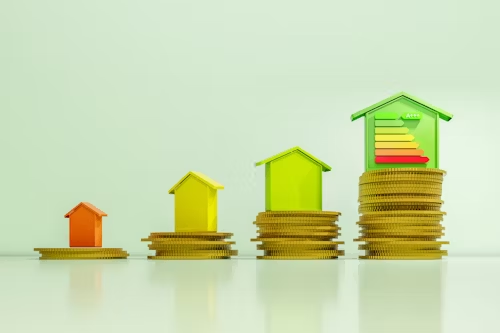
Sustainability is becoming a deciding factor in property value. Buyers and tenants are paying closer attention to energy efficiency, water management, and environmentally friendly designs.
Smart homes, solar-powered properties, and estates with efficient waste and water systems are expected to command higher prices. Over time, buildings that ignore sustainability may lose appeal, while those designed with the future in mind gain value faster.
Changing Work and Lifestyle Patterns
Remote and hybrid work models are changing where people choose to live. Proximity to offices is becoming less important for some buyers, while comfort, space, and quality of life are gaining priority.
This shift increases demand for properties outside traditional business districts, especially in well-planned suburbs and emerging residential hubs. Properties that offer flexible spaces for work-from-home setups, good internet access, and lifestyle amenities will perform better in the long run.
Government Policies and Land Use Regulations
Government decisions will continue to shape property values significantly. Zoning laws, land-use policies, tax structures, and housing regulations can either boost or suppress real estate growth.
Areas affected by rezoning from residential to commercial often experience rapid appreciation. Conversely, regions impacted by acquisition or regulatory restrictions may stagnate. Investors who monitor policy trends and understand land titles, approvals, and development plans will be better positioned to protect their investments.
Technology and Data-Driven Real Estate
Technology is transforming how properties are bought, sold, and managed. Digital land registries, online property verification, and data-driven pricing models are increasing transparency and reducing risk.
Over the next decade, properties tied to verified documentation and professionally managed developments will stand out. Investors will favor real estate companies that provide clarity, structure, and reliable data over informal transactions.
Structured Real Estate Investments and ROI Focus
Another emerging trend is the move toward structured real estate investments. Instead of buying property blindly and hoping for appreciation, investors are increasingly interested in projects with defined timelines and projected returns.
Models like Real Estate Money Back reflect this shift focusing on capital growth through structured development rather than passive waiting. This approach aligns with investors who want predictability, clearer exit strategies, and professional execution.
Conclusion
The next 5–10 years will reward investors who think beyond today’s market conditions. Infrastructure growth, population pressure, sustainability, lifestyle changes, government policies, and structured investment models will all influence property value.
Real estate will always be about land and buildings, but value will increasingly depend on planning, adaptability, and timing. Investors who stay informed and work with professionals will not just preserve value, they’ll multiply it.