Finding land that fits your budget is only the beginning of the buying process. Before you make a commitment, you need to see the property for yourself.
Pictures can show you the location, but they cannot reveal everything about the land. A proper site inspection allows you to examine the surroundings, access roads, drainage, boundaries, and physical condition.
It also gives you an opportunity to compare what you were told with what actually exists on the ground. That difference can matter when you are making a significant property investment.
A site inspection should therefore involve more than simply visiting the estate and looking at available plots. You need to know what to check and which questions to ask.
Why Is a Land Site Inspection Important?
A land site inspection helps you understand the property beyond its description. You can assess the physical environment and determine how suitable the location is for your plans.
It also gives you an opportunity to identify issues that may not appear in photographs or advertisements. Flooding, difficult access, poor drainage, encroachments, and surrounding activities can become obvious during an inspection.
Your inspection should also complement your document checks. A registered survey plan can establish your plot boundaries, location, dimensions, and coordinates. However, you should still confirm that the physical property matches the information in your documents.
Check the Exact Location of the Land
Start by confirming that you are standing at the location described by the seller or developer.
Check the surrounding roads, landmarks, neighbouring properties, and other identifiable features. You should also compare the location with the information provided during your initial enquiry.
For additional verification, coordinates from the survey plan can help you confirm the property’s position. ENGIS provides mapping tools that support location verification through coordinates and survey information.
Do not rely only on someone pointing out the location to you. Know exactly where the property sits within the wider area.
Confirm the Plot Boundaries
Your inspection should include the actual boundaries of the plot.
Look for survey beacons or other markers identifying the plot. Compare their positions with the survey plan and the plot number shown on the estate layout.
The dimensions should also correspond with the information provided to you. Any significant discrepancy deserves further investigation before you proceed.
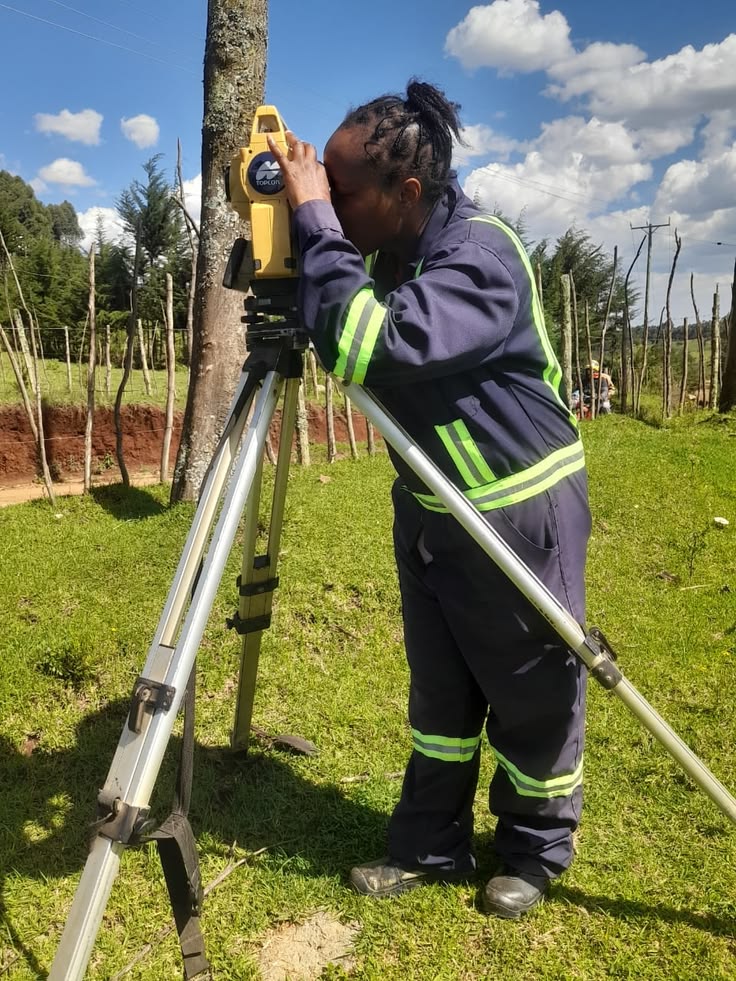
A licensed surveyor can provide more reliable assistance with boundary verification. ENGIS also advises buyers to rely on official surveys and licensed surveyors for accurate property boundaries.
Examine the Access Road
Good road access can affect how useful and valuable a piece of land becomes.
Look at the road leading to the property and the internal roads within the estate. Consider how easily vehicles can reach the area and how the roads may perform during the rainy season.
You should also ask about the status of the roads. Do not assume that an existing road automatically means the road has permanent legal protection.
For an estate, examine the site layout and compare the roads shown there with what exists physically. A properly planned layout should clearly show the relationship between plots, roads, drainage, and shared spaces.
Look at the Drainage
Drainage deserves particular attention during a land inspection.
Look around the plot for signs of standing water, erosion, water channels, or areas where water appears to collect. Pay attention to the slope of the land and the direction water appears to move.
A dry plot during your inspection does not automatically mean it will remain dry during heavy rainfall. If possible, visit the location during or shortly after rainfall.
You should also check the estate’s drainage infrastructure. Proper drainage can help reduce flooding risks and protect roads, buildings, and surrounding plots.
Assess the Land’s Topography
Look closely at the physical shape and level of the land.
Is the plot relatively flat, sloped, elevated, or located in a low area? The answer can affect construction requirements and potential development costs.
A plot that requires significant earthworks may require additional spending before construction begins. Ask questions about the soil and terrain if you intend to build immediately.
Royal Garden and Resort, for example, describes its land as completely dry and table. You can inspect the physical condition yourself during a site visit.
Inspect the Surrounding Environment
Do not focus only on the plot you intend to buy.
Walk around the area and observe nearby properties, businesses, roads, drainage channels, power infrastructure, and other developments. The surrounding environment can influence your property’s convenience and future appeal.
Consider what is currently around the land and what development appears to be taking place nearby. You can also ask the developer about planned infrastructure within the estate.
The goal is to understand the environment you are buying into, not just the individual plot.
Check Available Infrastructure
Find out what infrastructure already exists and what the developer plans to provide.
Check roads, drainage, electricity, water supply, security features, recreational facilities, fencing, and other relevant amenities. Do not simply accept a list of proposed facilities without inspecting what has already been delivered.
Viva Gold Real Estate lists infrastructure such as roads, drainage, street lights, recreation facilities, and security surveillance for Royal Garden and Resort.
The Prideland also includes features such as asphalted roads, water supply, electricity, drainage, and a relaxation centre. These are the types of features you should look for during your inspection.
Look for Signs of Encroachment
Pay attention to neighbouring buildings, fences, structures, and activities around your plot.
Check that nothing appears to cross into the boundaries of the land you are being shown. Also look for neighbouring activities that could affect access or future development.
This is another reason your physical inspection should work alongside your survey verification.
If the boundaries are unclear, do not guess. Ask for clarification and involve a licensed surveyor where necessary.
Ask About the Surrounding Land
The physical inspection is also a good opportunity to ask questions about neighbouring land.
Find out if nearby areas are privately owned, government owned, under development, or reserved for infrastructure. Ask about proposed roads, public facilities, commercial developments, or other projects that could affect the property.
You should also investigate any concerns raised by what you observe.
A site inspection is not only about seeing what you like. It is also about identifying what requires further verification.
Compare the Site With the Estate Layout
Ask to see the estate’s site layout and identify your intended plot.
The layout can help you understand the plot’s position within the development. It can also show roads, shared facilities, drainage routes, setbacks, and other planned features.
Your specific plot should make sense when you compare the layout with the physical site.
Viva Gold Real Estate explains that a site layout helps buyers understand plot positioning, road networks, drainage, shared facilities, and plot sizes.
Ask to Review the Property Documents
A site inspection should not replace documentation checks.
Ask to see the documents relating to the land and understand what they establish. Depending on the property, these may include the land title, land document, Deed of Assignment, Power of Attorney, and Registered Survey Plan.
For example, Viva Gold Real Estate lists an Enugu State approved Gazette as the title for Royal Garden and Resort. It also lists a Deed of Assignment and Registered Survey among the property’s documents.
You should still conduct independent verification before completing your purchase.
Bring the Right People to the Inspection
You do not have to conduct a land inspection alone.
A licensed surveyor can help verify boundaries, coordinates, and physical measurements. A property lawyer can review ownership documents and identify legal issues that may not be obvious during a physical inspection.
Having the right professionals involved can make the inspection more useful.
It can also prevent you from making decisions based only on what looks attractive during the visit.
Take Photos and Record Important Details
Take photographs and videos during the inspection where appropriate.
Capture the access road, plot boundaries, surrounding properties, drainage, infrastructure, and important landmarks. These records can help you compare the physical site with the information provided by the seller.
Write down questions that require further clarification. You can then follow up with the developer or your professional advisers.
Keeping clear records also helps you compare different properties if you are inspecting several locations.
Inspect More Than Once When Possible
One visit may not reveal everything about a property.
If possible, visit at different times or under different conditions. A location can look very different during heavy rainfall, busy traffic periods, or quieter hours.
Repeated visits can help you understand access, drainage, noise, surrounding activities, and general conditions.
You do not need to rush the inspection simply because you like the property.
Ask Questions Before Leaving the Site
Use your inspection to get answers while you are physically present.
Ask where your exact plot begins and ends. Ask about roads, drainage, infrastructure, documentation, allocation, and development plans.
Ask what happens after payment and when the relevant documents will be provided. Viva Gold Real Estate states that buyers receive documents such as payment receipts, allocation letters, contracts of sale, Deeds of Assignment, and Survey Plans as part of its stated process.
Any answer that remains unclear should be resolved before you commit your money.
Turn Your Inspection Into a Buying Decision
A good site inspection should leave you with more than photographs.
You should understand the location, physical condition, access, boundaries, surrounding environment, infrastructure, and documentation status.
The inspection should also help you identify issues that require professional verification. If something does not match the information you received, pause and investigate before proceeding.
Buying land is easier when you know exactly what you are buying.
Inspect Before You Invest
A land site inspection gives you the opportunity to see beyond advertisements and property descriptions. It allows you to examine the land, question what you see, and compare the physical property with its documentation.
For buyers considering land in Enugu, Viva Gold Real Estate offers developments where site inspection can form part of the buying process. Royal Garden and Resort, The Wealthy Place, and The Prideland are among the developments featured by the company.
Before you buy, inspect the land, review the documents, verify important information, and seek professional advice where necessary.
If you are ready to inspect available properties, visit Viva Gold Real Estate’s website to explore its developments and request an inspection.
You can also call or WhatsApp +234 813 221 5202, +234 901 001 0160, or +234 901 001 0170 to speak with the team.
The right land investment starts with knowing exactly what you are buying.