
If you had ₦1 million twenty years ago and you put it in a savings account, the interest would have grown your balance. But inflation would have quietly eaten the real value of every naira sitting there. You would have more numbers on a page and less actual wealth in your hands.
If you had put that same ₦1 million into Nigerian stocks, you would have experienced some years of genuine growth and some years of watching your portfolio shrink during market downturns, political uncertainty, and currency fluctuations that no analyst predicted.
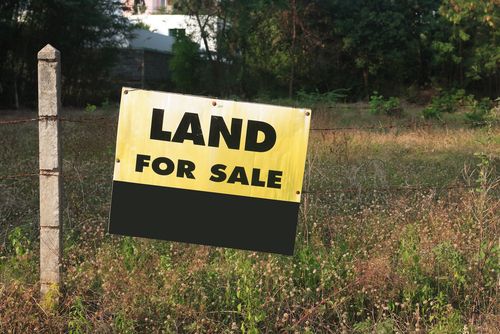
But if you had used that ₦1 million to buy land in a growing Nigerian city twenty years ago, a city like Enugu, which was already showing the early signs of the growth it is experiencing today, the story would be very different. That land would be worth multiples of what you paid. Not because of luck. Because of how real estate works.
Land Is Finite. Demand Is Not.
The most fundamental reason Nigerian real estate has consistently outperformed other asset classes is the simplest one. You can print more money. You can issue more shares. You can mine more gold. But you cannot create more land.
In a country with a population growing as rapidly as Nigeria’s, projected to be one of the most populous nations on earth within decades, the demand for land is structurally, permanently upward. More people need more homes, more businesses, more infrastructure. All of it sits on land. And land does not expand to meet that demand. It simply becomes more valuable.
It Holds Value Against Inflation
Every Nigerian who has lived through currency devaluation understands this intuitively. When the naira weakens, the price of land does not fall, it rises. Because land is a real asset. It is not a number in a system that can be adjusted by policy. It is physical, finite, and always in demand.
Over the last twenty years, Nigeria has experienced significant inflation and multiple rounds of currency pressure. Through all of it, well-located land has not just held its value, it has appreciated in naira terms far beyond the rate of inflation. That is not a coincidence. It is the nature of the asset class.
The Compounding Effect of Location and Time
Real estate returns in Nigeria are not uniform. A plot in the right location, bought at the right time, delivers returns that dwarf the average. And the pattern is consistent, the cities and corridors that showed early signs of infrastructure investment, commercial growth, and population movement rewarded early buyers the most.
Enugu is in that position right now. The city is growing deliberately and visibly. Infrastructure is expanding. Commercial activity is increasing. And credible developers like Viva-Gold Real Estate are building structured, documented estates in the corridors where that growth is most concentrated.
The Prideland in Golf Annex Phase 2, a fully serviced, gated estate near Enugu Golf Course, Commercial Centres, and New Market Enugu, at ₦25 million per plot with a Government Allocation title, represents exactly the kind of entry point that history shows delivers the strongest long-term returns.
The Wealthy Place, Enugu, positioned near Centenary City, Royal Court Apartments, and major institutional landmarks with complete documentation including Land Title, Deed of Assignment, Registered Survey Plan, Power of Attorney, and Land Document, is another opportunity in a corridor that is actively appreciating.
Every Other Asset Class Has a Bad Year. Land Doesn’t Disappear.
Stocks crash. Cryptocurrency collapses. Businesses fail. Even gold has years of underperformance. But land particularly well-located, well-documented land in a growing Nigerian city has never become worthless. It has never gone to zero. In the worst economic periods Nigeria has experienced, land held its value while other assets crumbled.
That resilience is not just comforting. It is strategically significant. It means that when you allocate a portion of your wealth to Nigerian real estate, you are putting it into the asset class with the longest track record of weathering every storm the Nigerian economy has produced and coming out the other side more valuable.
The Next Twenty Years
The argument for Nigerian real estate over the next twenty years is even stronger than the argument over the last twenty. Population growth continues. Urbanization accelerates. Infrastructure investment increases. And cities like Enugu, which are still in the early-to-mid stages of their growth trajectory, have the most room to deliver the kind of returns that turn modest investments into generational wealth.
Viva-Gold Real Estate is positioning serious investors at the front of that trajectory right now. With estates built on real infrastructure, backed by comprehensive documentation, and located in Enugu’s most strategically valuable corridors, they are offering exactly what every serious investor needs, the right asset, in the right place, at the right time.
Conclusion
Twenty years of Nigerian economic history has delivered one consistent verdict, real estate wins. It wins against savings. It wins against stocks. It wins against cryptocurrency. And it wins against almost every other place a Nigerian investor can put their money.
The next twenty years will not be different. The fundamentals that drove two decades of outperformance are stronger today than they have ever been. Land in a growing city, bought from a trusted developer, with clean documentation and real infrastructure, remains the most reliable path to lasting wealth in Nigeria.
Viva-Gold Real Estate is ready to help you walk that path, in Enugu, right now, with plots that are verified, documented, and positioned for exactly the kind of appreciation that history says is coming. Reach out now.